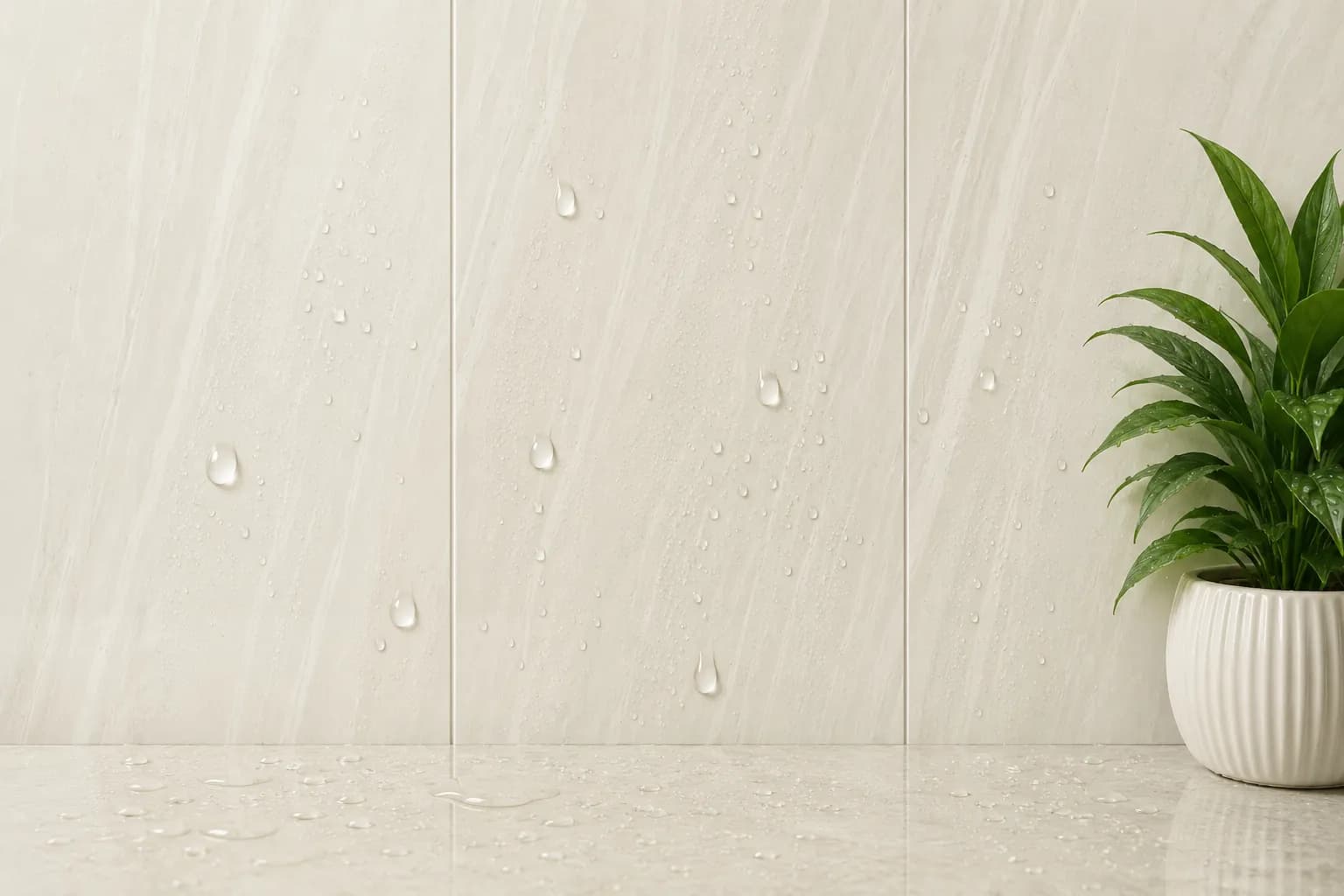
What makes a PVC wall panel waterproof?
PVC wall panels are waterproof because the material itself does not absorb water, and when the panels are made and installed correctly, they create a moisture-resistant surface that works especially well in kitchens, bathrooms, and other humid spaces.
PVC wall panels are widely used in modern interiors because they solve a problem that many traditional wall finishes struggle with: moisture. When people ask whether PVC wall panels are waterproof, the short answer is yes, but the more accurate answer is that the material, the structure of the panel, and the quality of installation all work together to create that waterproof performance.
PVC stands for polyvinyl chloride, a plastic-based material that is naturally non-porous. That means water cannot soak into it the way it can with wood, plaster, or some painted surfaces. Instead of absorbing moisture, the panel keeps water on the surface, where it can be wiped away. This is one of the main reasons PVC wall panels are so practical in bathrooms, kitchens, laundry areas, and other places where humidity is part of daily life.
A good PVC wall panel is not just “plastic on a wall.” It is designed as a finished cladding system. The surface layer is made to resist water, stains, and easy cleaning, while the core gives the panel its shape and strength. In higher-quality products, the edges are also designed to fit closely together, which helps reduce the chance of water getting behind the panel. In other words, waterproofing is not only about the material itself, but also about how the product is engineered.
Installation plays a major role as well. Even a strong PVC panel can lose performance if it is badly fitted. Gaps, poor sealing, weak adhesive, or careless cutting can allow moisture to reach the wall behind the panel. That does not mean the panel is no longer waterproof, but it does mean the system is no longer fully protected. For this reason, we always consider installation quality part of the product itself. A proper installation should create a tight, clean finish with minimal opportunity for water penetration.
Another reason PVC wall panels perform well in wet or humid spaces is that they are stable. Unlike wood-based materials, they do not swell, warp, or rot when exposed to moisture. They also do not need grout lines like tiles, which reduces one of the most common weak points in wall finishes. Grout can stain, crack, and absorb water over time, while a PVC panel surface is much easier to maintain.
It is also worth being precise about the word waterproof. In everyday use, people use it to mean that a material can handle splashes, steam, and normal humidity without damage. In that sense, PVC wall panels perform very well. However, no wall system should be treated as magical. If a panel is exposed to constant water pressure, poor sealing, or ongoing structural leaks behind the wall, performance will suffer. That is why waterproof panels work best when they are part of a well-prepared wall system, not a substitute for solving a leak problem.
From a business point of view, this is what makes PVC wall panels attractive to distributors, contractors, and end users. They combine moisture resistance, low maintenance, and fast installation in one product. That combination is especially valuable in renovation projects, where customers want a clean result without the disruption and ongoing maintenance of more traditional finishes.
For buyers and distributors, the real question is not simply whether PVC wall panels are waterproof. The better question is whether the panel has a quality structure, a reliable finish, and a proper installation method that allows it to perform as intended. When those three things come together, PVC wall panels are one of the most practical wall solutions for humid and high-use interiors.